 PLATE 301
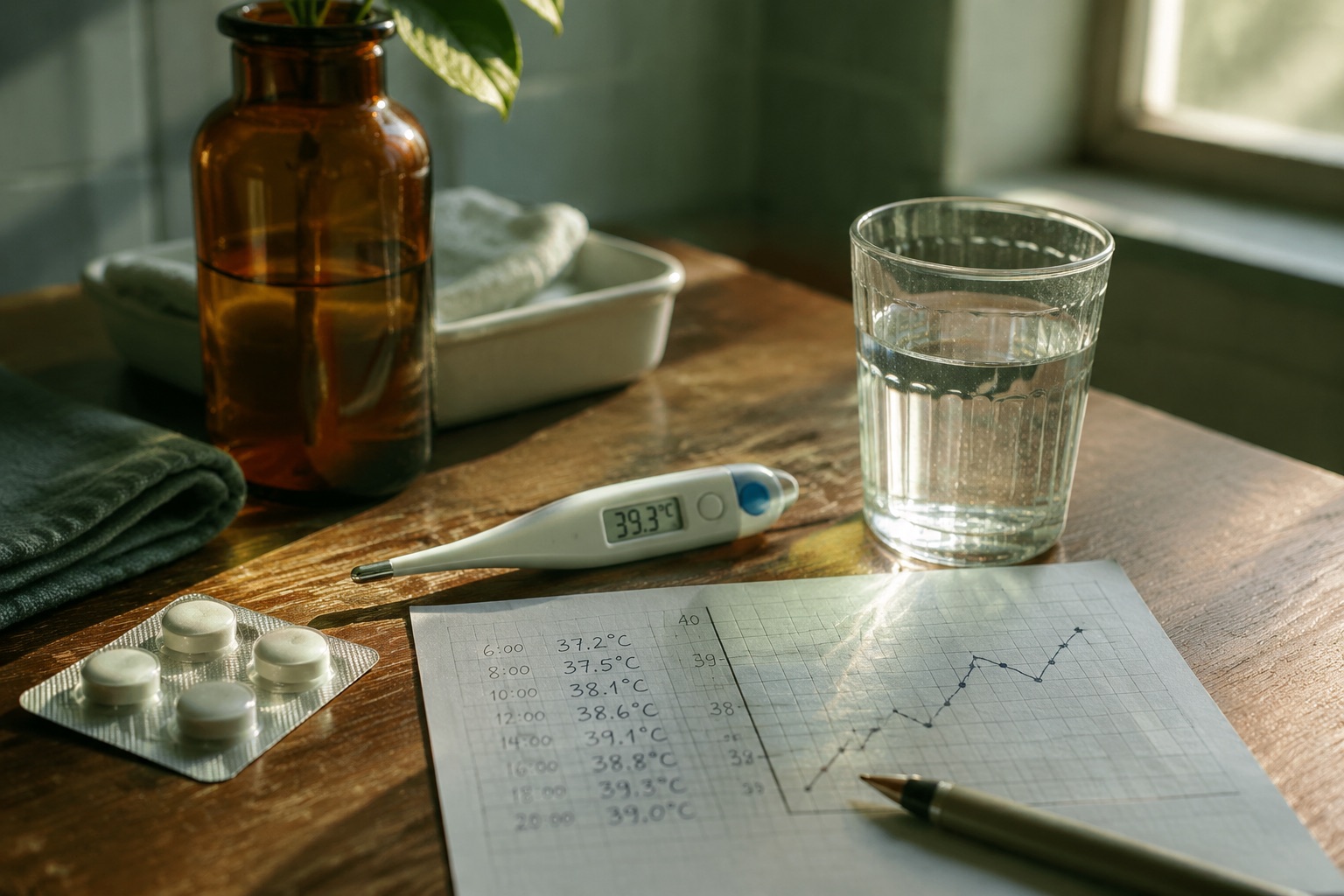
- Thermometer: twice daily, written down
- Water glass: pale urine is the target
- Chart: the curve clinicians read first
01The three phases
Febrile phase, days 0-3
High fever, often 39-40°C, with headache, pain behind the eyes, muscle and joint pain, nausea. Most dengue looks like a bad flu here. Danger signs are rare in this window, but the day count starts now: write down the first day of fever.
Critical phase, days 4-6
Fever starts to fall and most people feel better. This is precisely when the dangerous form develops: plasma leakage, falling platelets, shock in severe cases. The six warning signs all live in this window. Feeling better is not being safe.
Recovery phase, days 7-10
Appetite returns, urine normalizes, a convalescent rash may appear (red islands on white skin, itchy), and fatigue can linger for weeks. The danger has passed; the rest is patience.
02The calendar, day by day
First fever. Write the date; everything counts from here. Start a temperature log, twice daily. Begin oral fluids: water, soup, oral rehydration salts if vomiting.
Peak fever, body aches. Paracetamol per label for fever and pain. Never ibuprofen or aspirin: they raise bleeding risk. No antibiotics: dengue is viral.
Last clearly safe day to test NS1 antigen (best within 5 days of onset). If fever is still high and you are in a dengue area, testing today or tomorrow answers the question early.
The transition. Fever often falls today. Raise attention, not relief: from now through day 6 is when warning signs declare themselves.
IgM antibodies become detectable from about day 5. If untested so far, this is the window. Watch for the six signs: abdominal pain, persistent vomiting, rapid breathing, bleeding gums or nose, drowsiness, blood in vomit or stool.
End of the critical window for most uncomplicated cases. Any warning sign today still means same-day care, not tomorrow.
Recovery. Appetite, urine output and energy should climb back. Convalescent rash may appear; it is expected, not a relapse. Fatigue for one to two weeks is normal.
The emergency rules override the calendar: severe abdominal pain, persistent vomiting, bleeding, drowsiness or confusion mean hospital now, on any day, at any fever level.
03The test windows: NS1 vs IgM
Two tests, two clocks. NS1 antigen detects the virus itself and works best in the first five days of fever. IgM detects your antibody response and turns positive from about day five onward. Testing NS1 on day seven or IgM on day two both waste the sample. If the first test is negative but suspicion stays high, retest in the correct window rather than dismiss.
| TEST | WINDOW | WHAT IT READS |
|---|---|---|
| NS1 antigen | Days 1-5 of fever | Detects viral protein; strongest early |
| IgM antibody | From day 5 onward | Detects immune response; late but reliable |
| IgG antibody | Weeks later | Past infection; used for surveys, not acute care |
04Home care that helps, and the line where it stops
Home care for uncomplicated dengue is simple and worth doing well: fluids beyond thirst (aim for pale urine, four to six times a day), paracetamol per label, rest, and a written temperature log. It stops working the moment any warning sign appears. The log matters: clinicians read a temperature curve faster than a story.
| ACTION | TARGET | NOTE |
|---|---|---|
| Fluids | Target pale urine | Water, soup, ORS; more if vomiting |
| Fever control | Paracetamol only | Never ibuprofen or aspirin until dengue is excluded |
| Monitoring | Temperature log, twice daily | Plus daily weight in severe-risk households |
| The stop line | Any one warning sign | Hospital the same day; do not wait for morning |
05Reading the fever curve
The chart below is the whole course in one line: fever climbs and holds for three days, drops into the critical window, then normalizes. The shaded band is where the warning signs live. A fever that falls while warning signs rise is the signature of severe dengue, and it is the single most misread pattern in the disease.
Course phases: WHO dengue guidelines (2009) ch. 2; fact sheet 2025-05 revision; test windows: CDC dengue diagnostic guidance. All checked 2026-09.