01Before the lap
Three items, no shopping required: a flashlight (larvae sit at the surface, invisible from above without side light), a bucket or trug (every container you empty needs somewhere to go), and gloves. Pick the hour: morning after rain is ideal, because everything that caught water overnight is full and visible.
02The twelve stops
STOP 01Plant pot saucers
The classic. Aedes eggs glue to the inner wall just above the waterline and survive months dry; the first refill hatches them. Look at the water surface with side light: larvae hang like tiny commas, tail up. The move: tip the water on the soil, scrub the saucer wall with your thumb, done. Weekly in season. Why first: highest positivity of any container class in CDC surveillance rounds.
 PLATE 101
- Larvae hang at the surface: commas, tail up
- Scrub the wall above the old waterline: eggs are glued there
- Pour the water into the soil, not the drain
STOP 02Open buckets and watering cans
One neglected bucket can seed a street block: Aedes stay within roughly a hundred meters of where they hatch. The move: tip and store upside down, or lid tight. A watering can with its rose attached holds a perfect dark reservoir; unscrew it and shake it out.
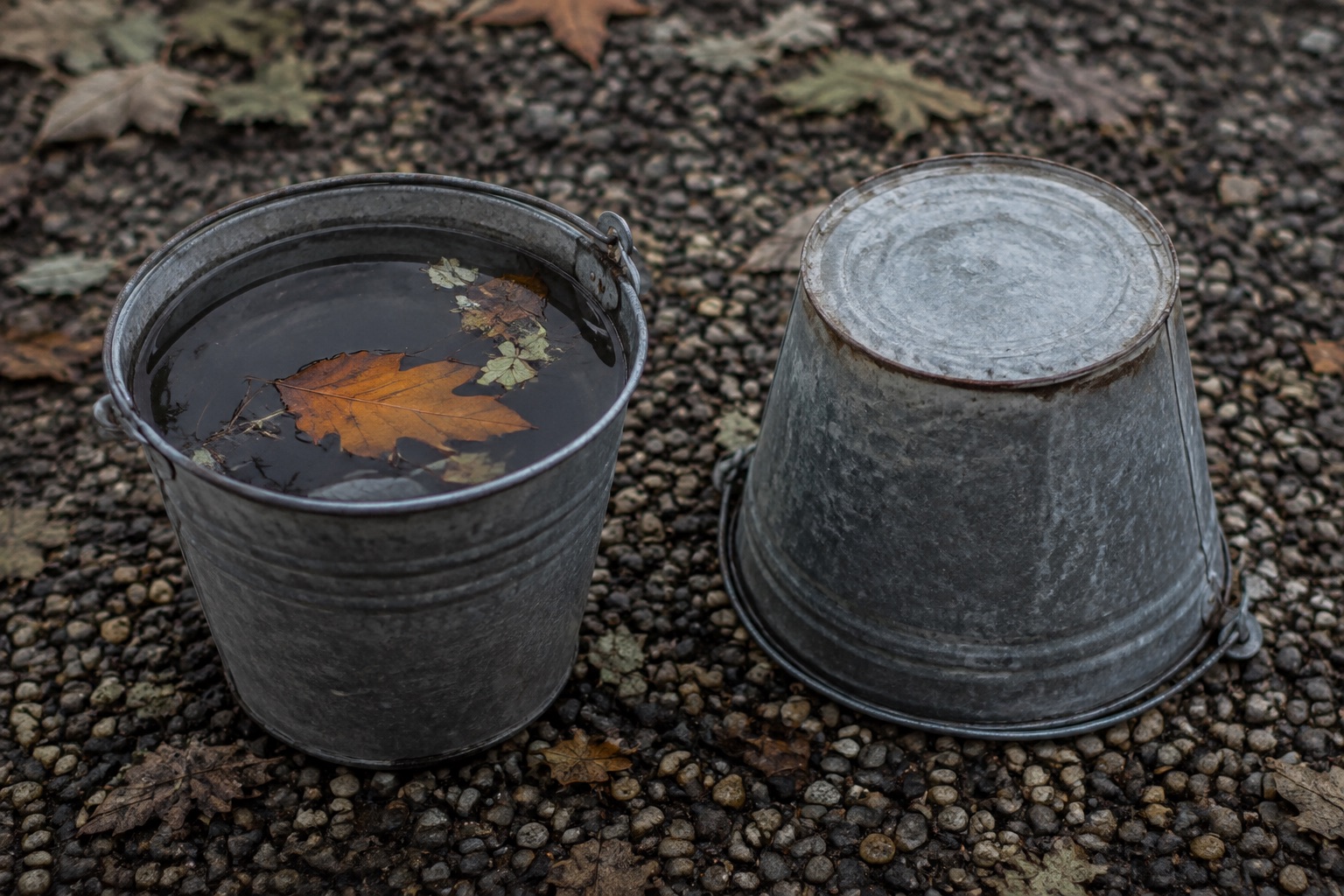 PLATE 102
- Water + leaves: organic, shaded, Aedes-ready
- Upside down: no water, no eggs, done
STOP 03Roof gutters
You cannot see into them from the ground; that is the point. Culex territory: organic-rich water, shade, a night biter's nursery. The move: run water from a hose at the downspout end and watch it exit; if it does not exit, clear from the far end with a plumber's snake or a blower. The tell that you missed one: mosquitoes at dusk that were not there at noon.
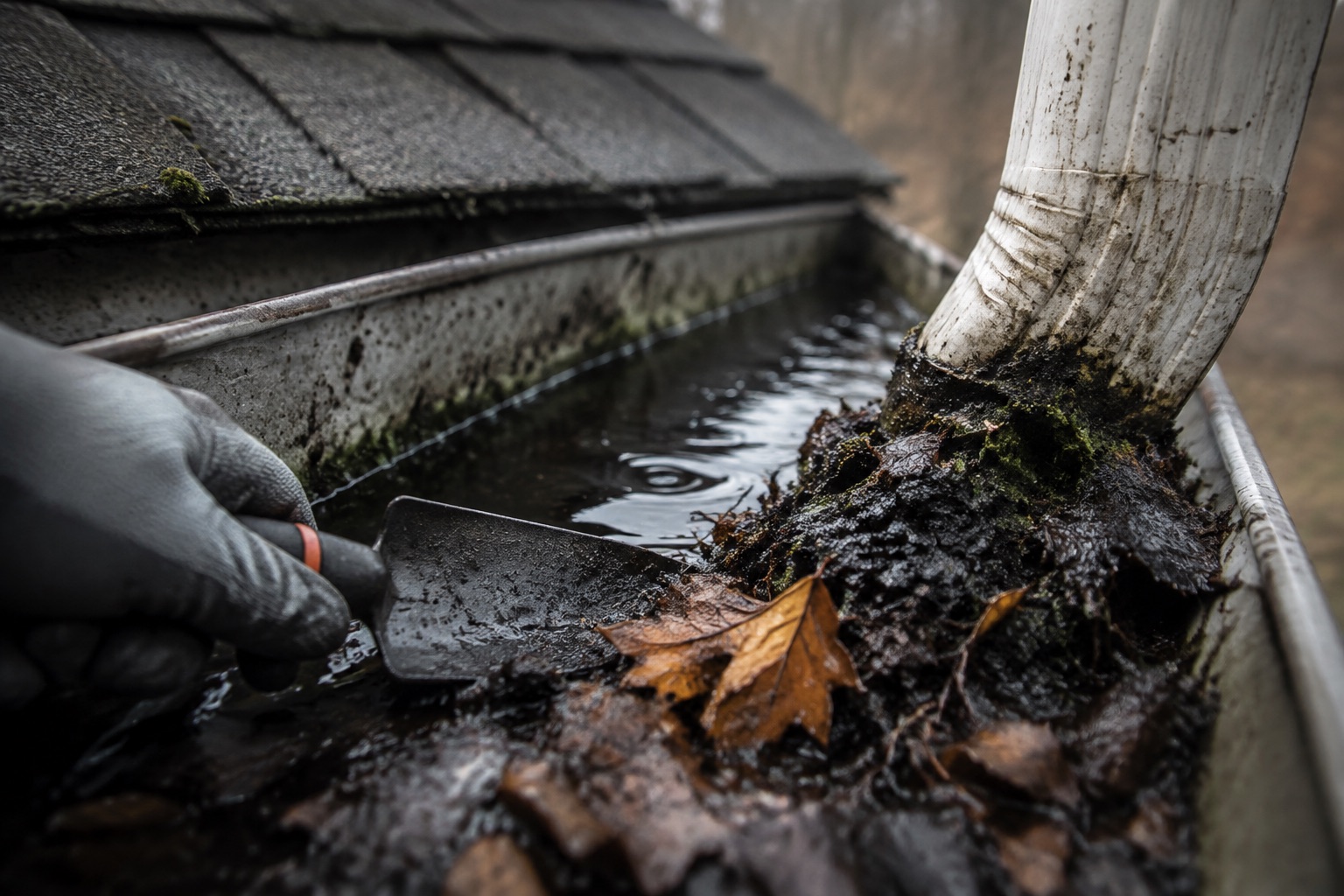 PLATE 103
- Leaf dam: water pools behind it
- Dark surface film: days old, larvae likely
- Gloved trowel: clear the dam, flush again
STOP 04Folded tarps, pool covers, swing canopies
Every fold is an independent puddle, and a tarp over a boat or firewood holds ten of them. The move: pull it taut, or re-fold so the folds point down. Shake out weekly in season; a thirty-second shake replaces a week of breeding.
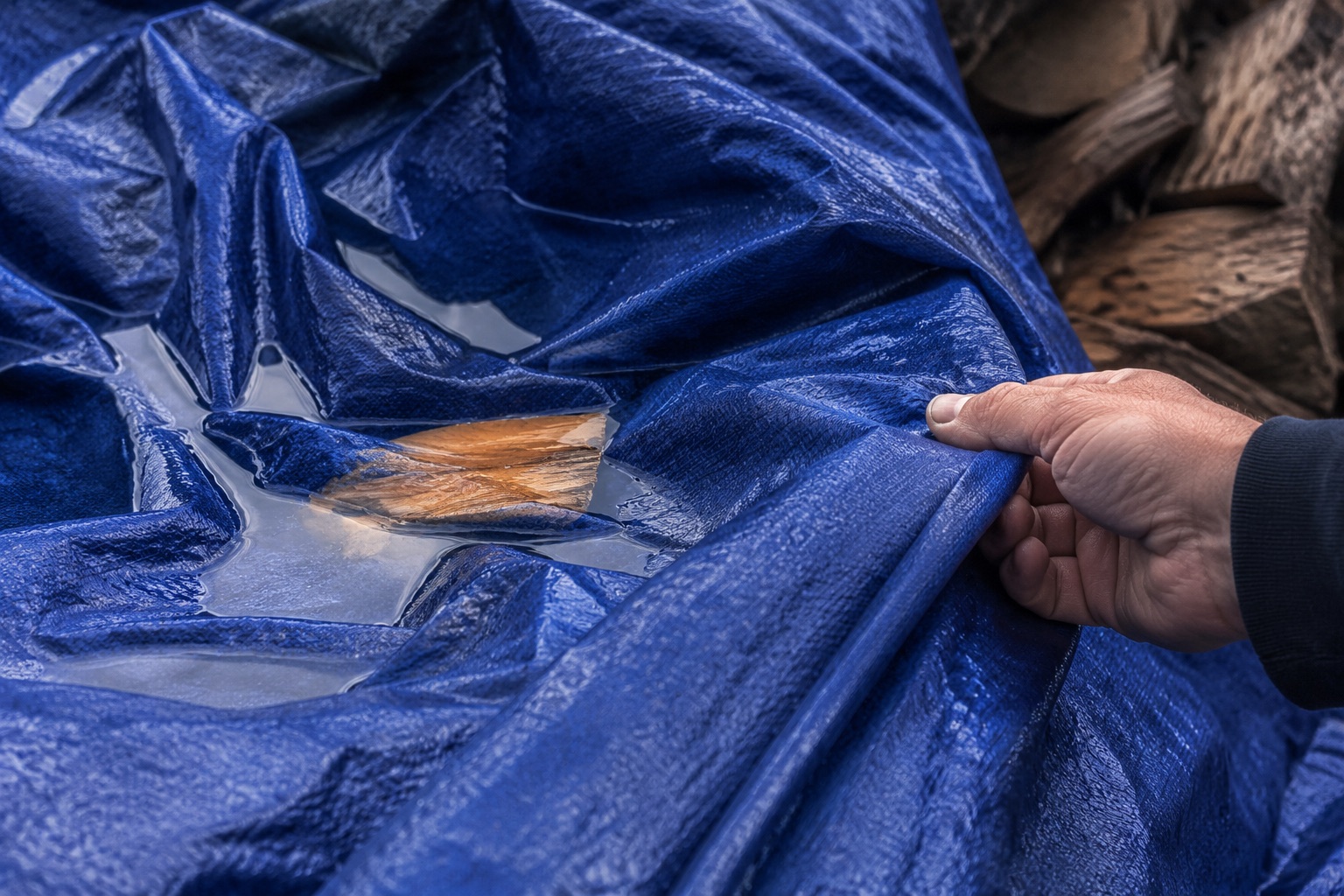 PLATE 104
- Sky-reflecting puddle: fold holds water
- Slack fabric: pools form wherever it dips
- Hand re-folds taut: thirty seconds replaces a week of breeding
STOP 05Birdbaths
The one container people deliberately fill. The rhythm is the fix: a full dump-and-scrub every five days beats any chemical, because the seven-to-ten day egg-to-adult window cannot complete. The move: empty, quick scrub to dislodge eggs at the waterline, refill.
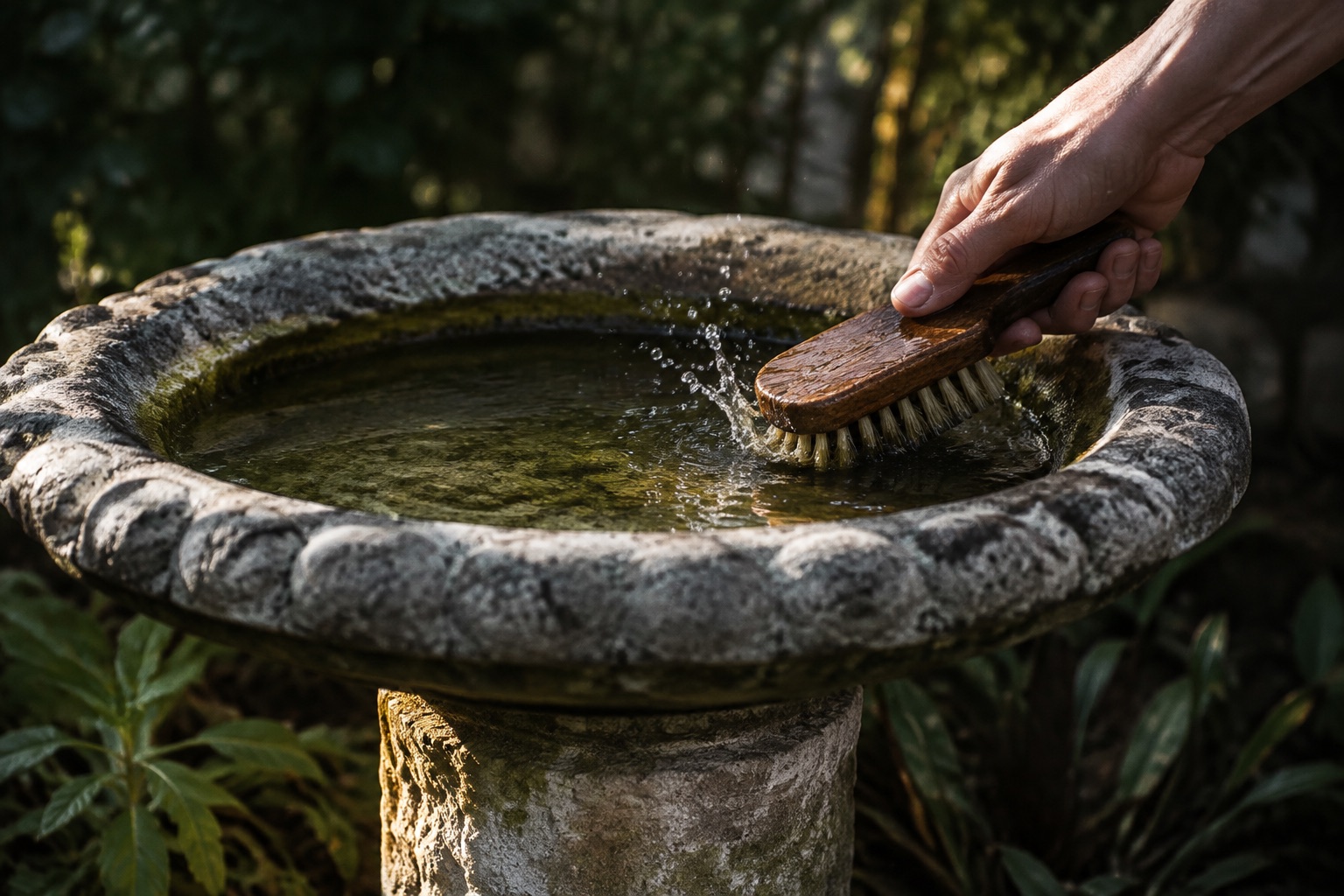 PLATE 105
- Green tinge: algae plus days of standing
- Scrub the ring at the waterline: eggs sit above it
STOP 06Children's toys
Sandboxes with a lid that catches rain, dump trucks left hub-down, slides with molded footwells. All pool. The move: a quarter-inch drain hole in the lowest point of anything that lives outside, or bring them in. The hole does not ruin the toy; the water ruins the evening.
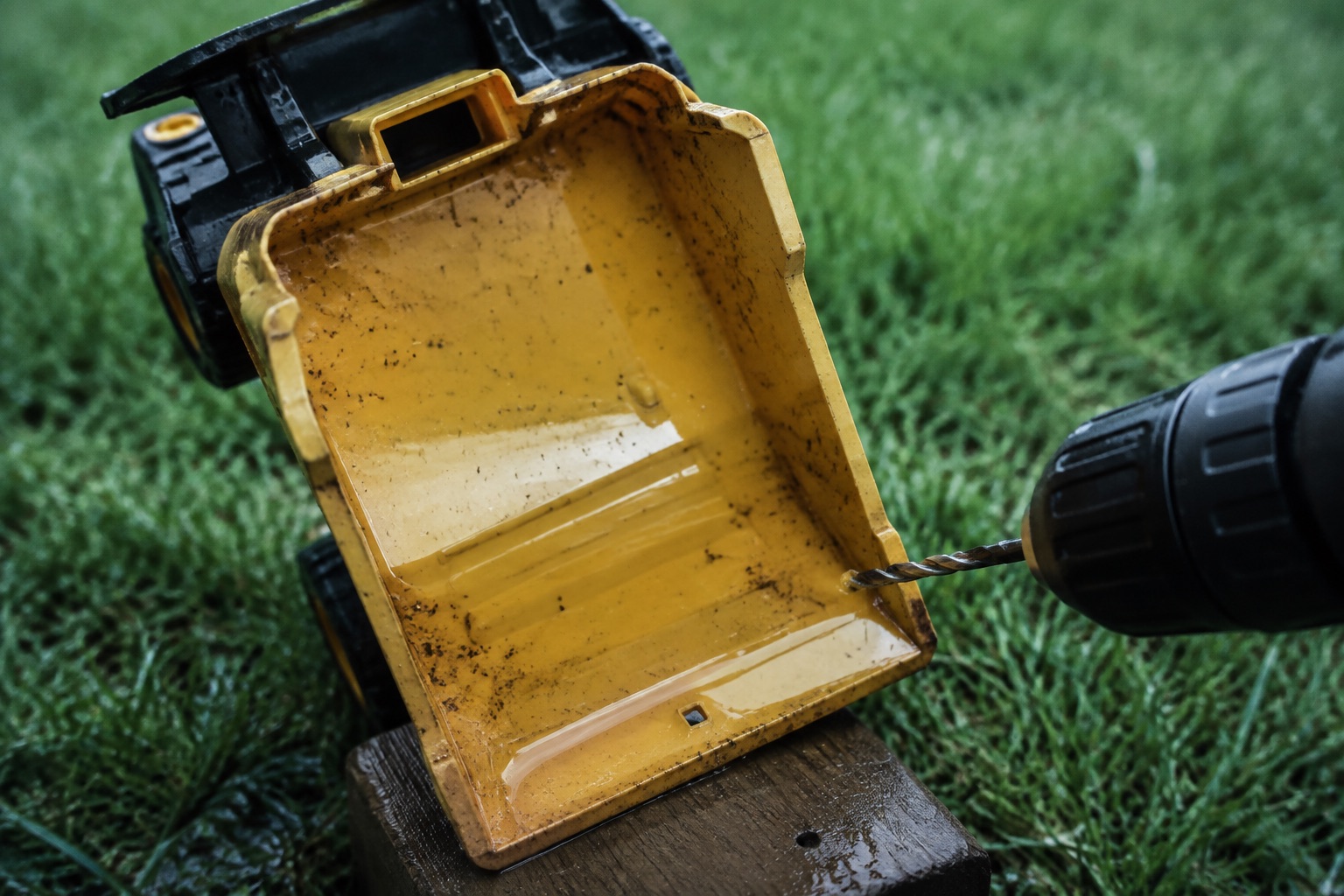 PLATE 106
- Hub-down truck: a perfect dark reservoir
- Drain hole at the true low point: water leaves on its own
STOP 07Trash and recycling bins
Both the bin and its lid hold water: the lid's rim faces up and catches rain invisibly. The move: drill two drain holes in the lid rim, store bins tilted, and keep the bin itself lidded tight.
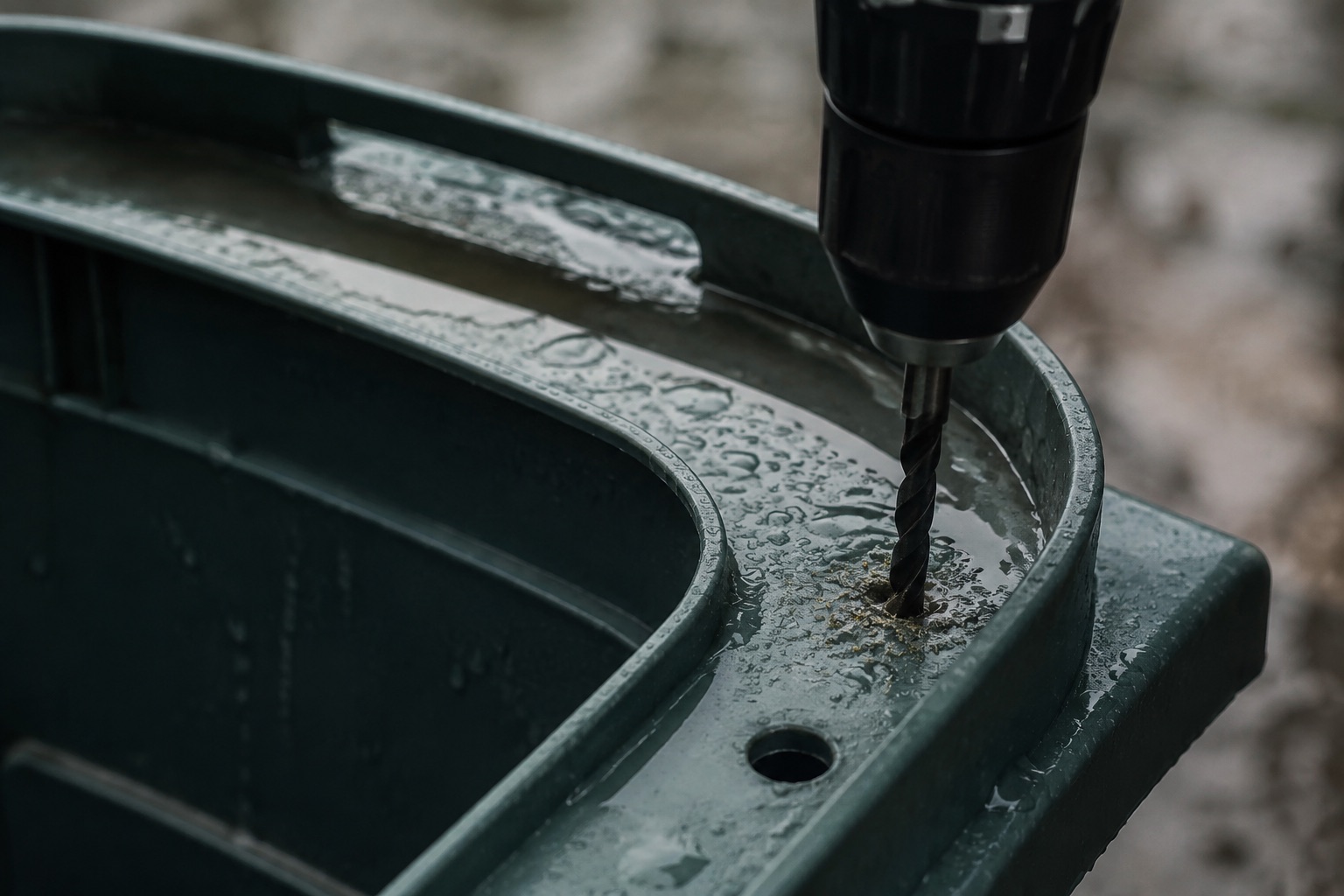 PLATE 107
- Lid channel: an inch of rain sits here
- Drill two holes in the rim, store bins tilted
STOP 08Pet water bowls
Warm, organic, refreshed daily: the perfect nursery, but only if the rhythm breaks. The move is the cheapest on this page: dump and rinse daily when you refresh. Doing it during the same trip as feeding builds the habit.
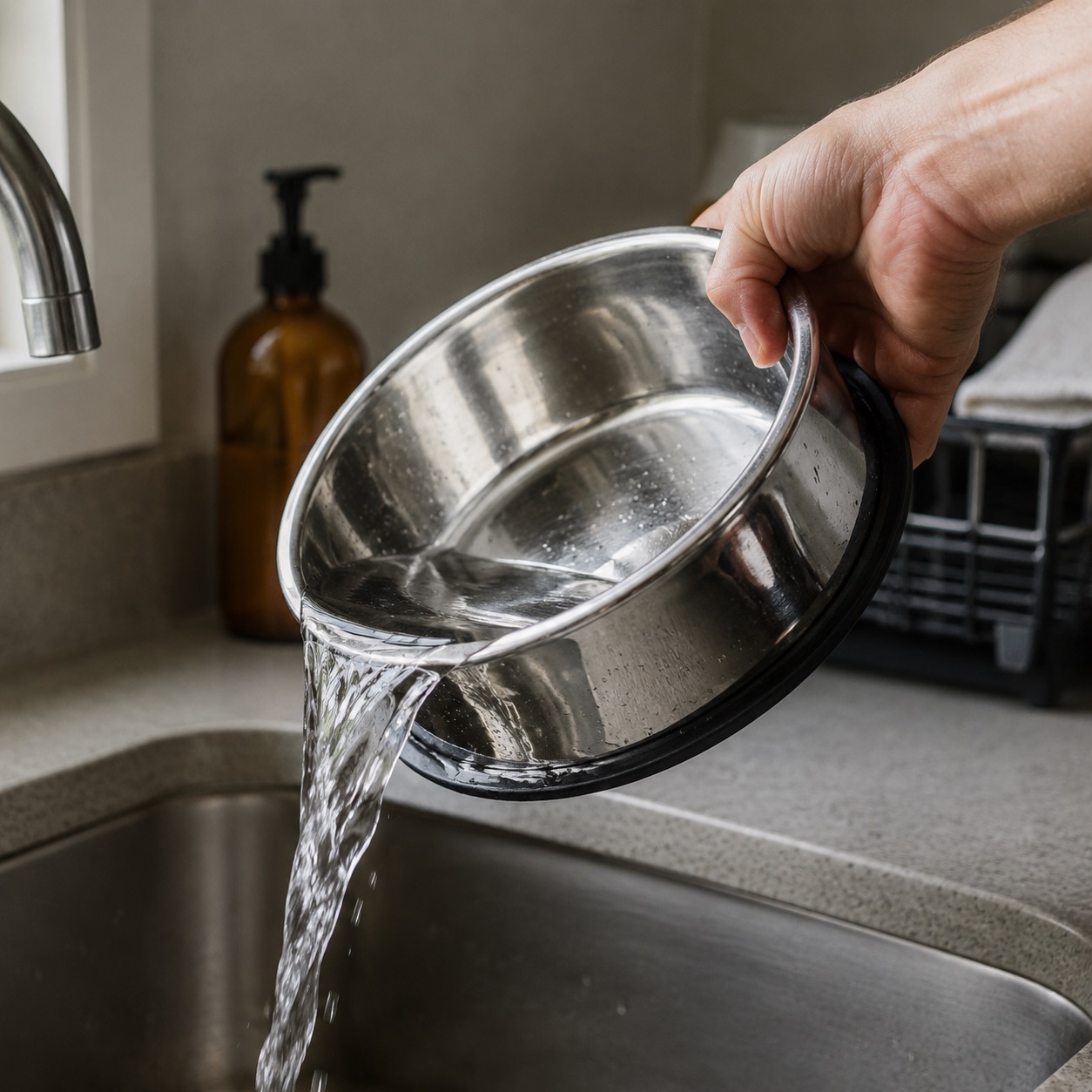 PLATE 108
- Same trip as feeding: the habit is the fix
STOP 09Rain barrels and cisterns
The containers you cannot tip. This is the one stop with a product answer: a fine mesh lid (mosquitero) on every opening, and Bti inside, per label. A barrel without a lid is a mosquito farm with a tap. See the Bti section below.
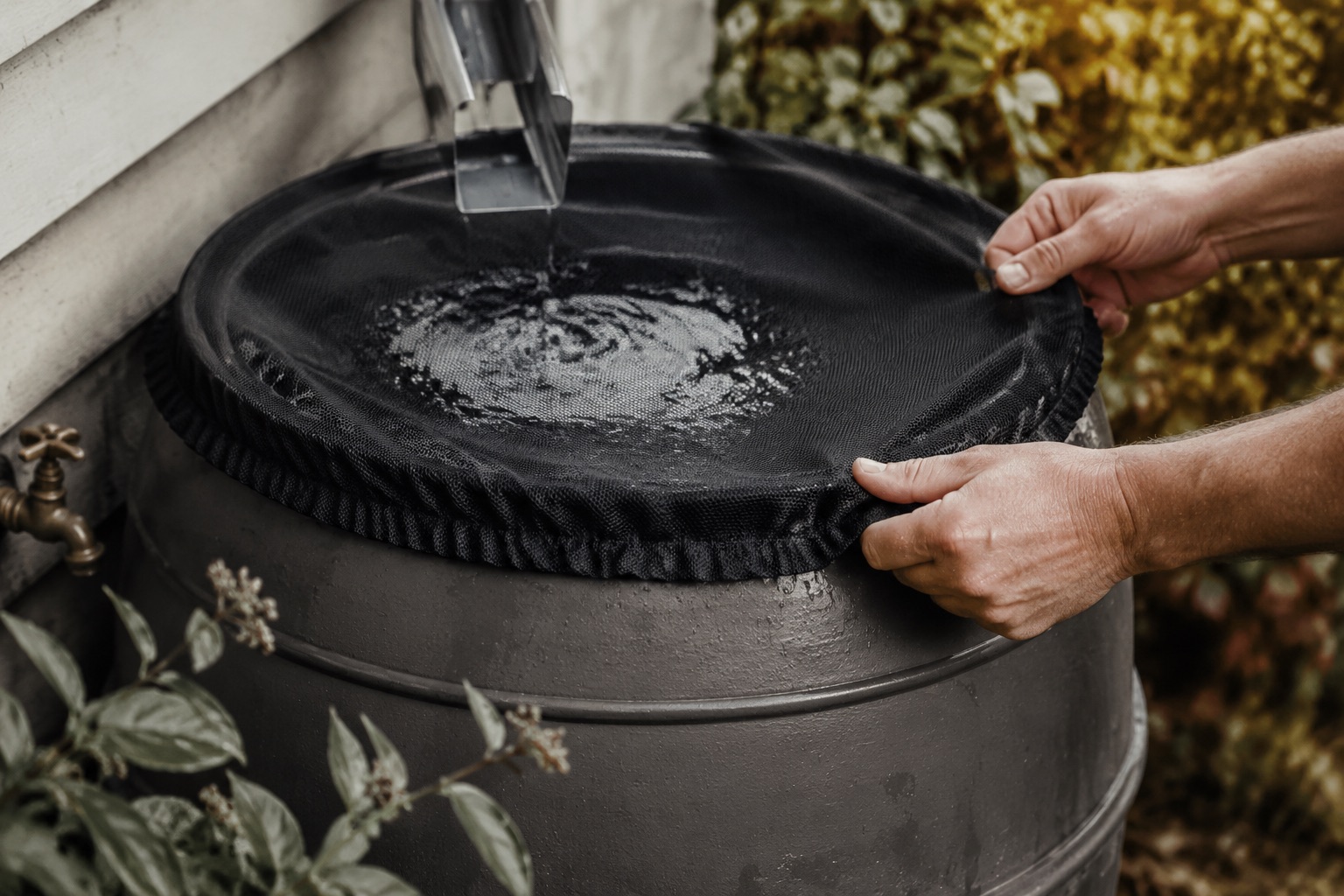 PLATE 109
- Mesh fine enough to stop a mosquito: not cheesecloth
- Elastic edge pressed tight: no gaps
- Downspout must enter through the mesh, not beside it
STOP 10AC drip pans and condensate lines
A unit running in summer produces a steady trickle: constant water, constant shade. The move: check that the line drains to soil or a drain, not a low spot; if the pan itself stands, give it a weekly glance and a wipe.
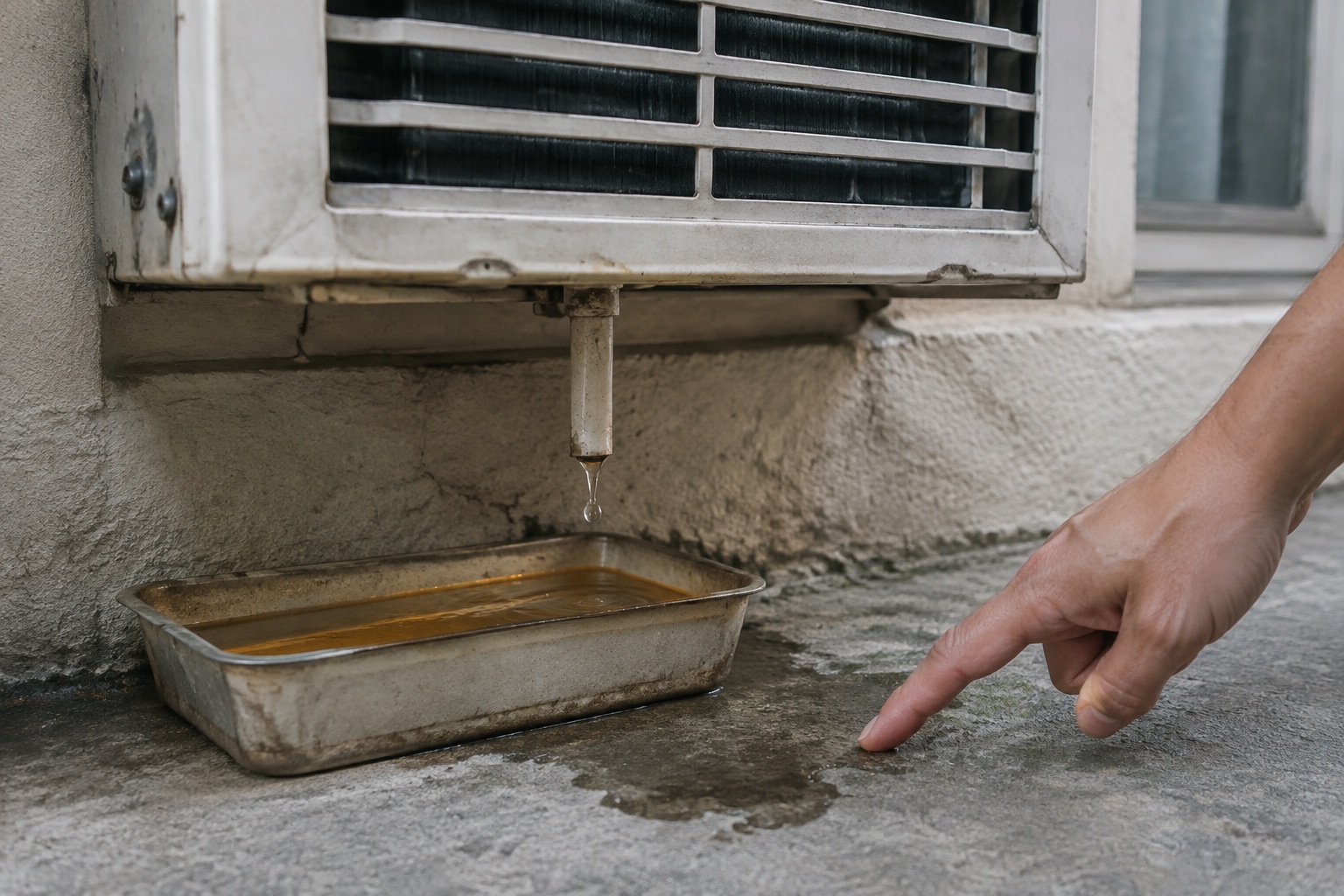 PLATE 110
- Damp patch: the line ends in a puddle-in-progress
- Pan half-full: one weekly glance and a wipe
STOP 11Tree holes and stumps
Natural containers, easy to forget because they look like landscape. A rot-pocket in a trunk holds liters invisibly. The move: fill with sand or expandable foam; do not leave an open cup of organic water at knee height.
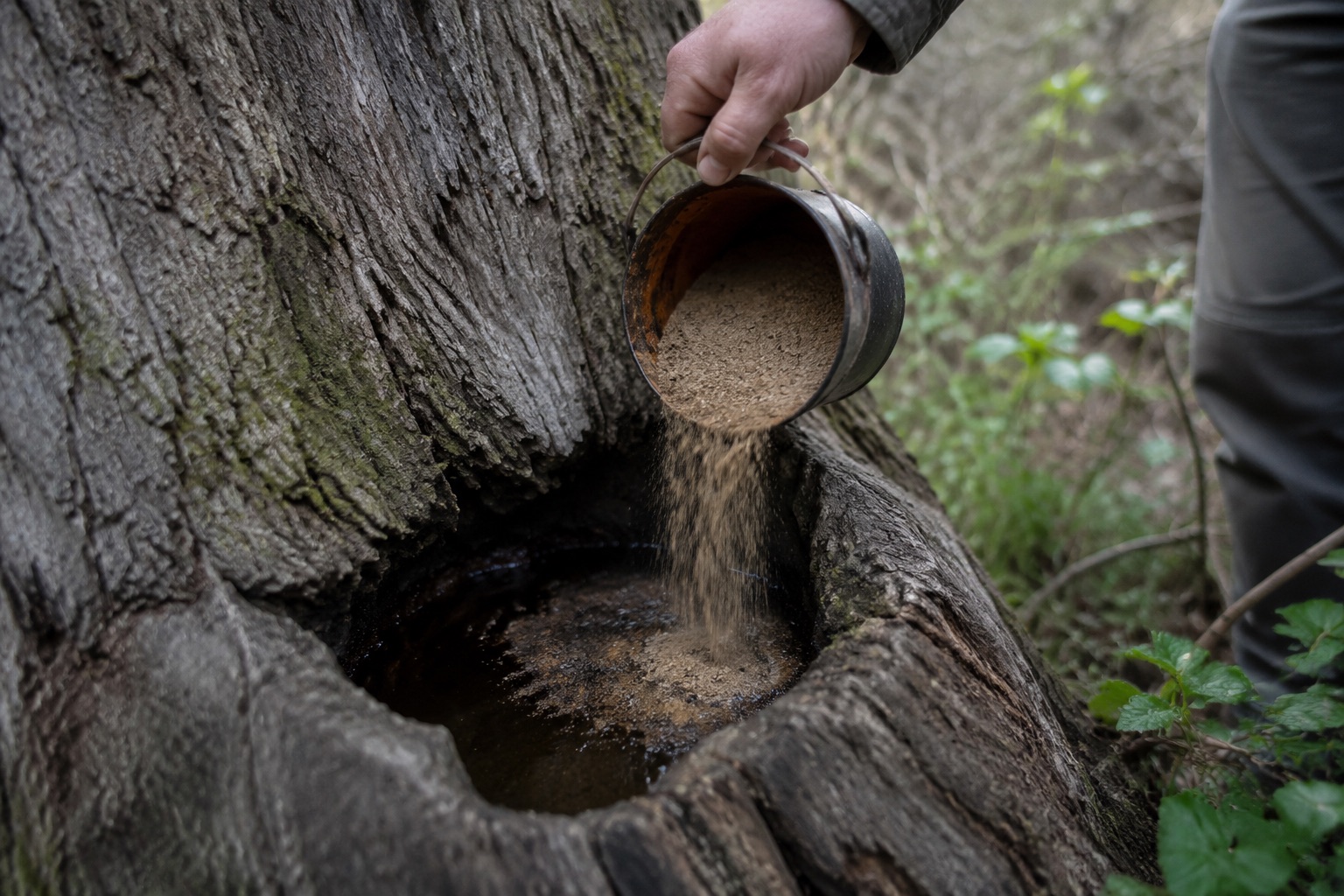 PLATE 111
- Rot pocket: liters hide invisibly inside the trunk
- Sand fill: permanent, cheaper than any gadget
STOP 12The property line
The last stop is the walk itself: fence-line planters, the neighbor's tire you can see over the fence, the shared drain. You cannot fix the neighbor's yard; you can fix what drains onto yours. And Aedes being hundred-meter mosquitoes, your lap matters more than their pond.
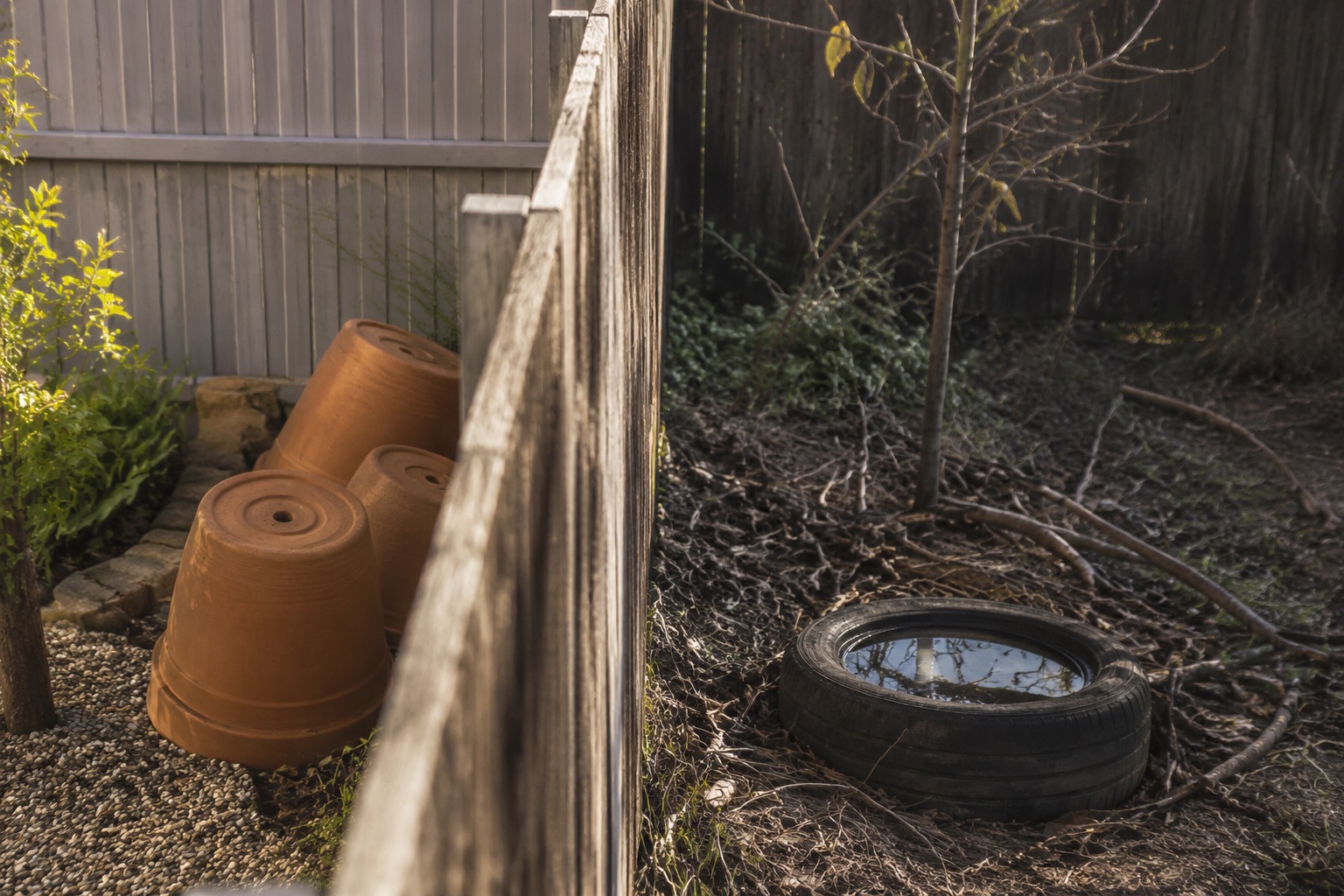 PLATE 112
- Your side: overturned, drained, done
- Their tire: report to the municipality, do not trespass
03The clock you are racing
Egg to biting adult takes seven to ten days in warm water. Every stop above is the same race against the same clock: interrupt the water within the window and the eggs die with it. Miss it and the yard resets to zero mosquitoes in about a week. That is why the survey is weekly in season and monthly out of it, not once: the clock restarts with every rain.
04Is Bti larvicide harmful to people and pets?
Is larvicide harmful to humans? Bti at label rates is not: Bacillus thuringiensis israelensis is toxic to mosquito and blackfly larvae, harmless to pets, birds and people when used as labelled, and registered for residential use by the US EPA. Use it on water you keep (rain barrels, ornamental ponds, cisterns). Granules or briquettes, per the label: a briquette lasts about thirty days; granules go in on a monthly rhythm. It does not repel adults and does nothing for pupae: match it to the calendar, not to the panic.
Container-positive ranking: CDC container surveillance guidance and WHO dengue vector surveys. Development window: WHO dengue guidelines (2009) ch. 2. Bti: US EPA registered larvicide labeling. All checked 2026-09.