DISEASE FILE · GRADE C: WHO FACT SHEET, CHECKED 2026-09
Japanese encephalitis: a travel-region decision.
Rare but severe: most infections are mild or silent, yet the neurological form kills up to a third and leaves half of survivors with permanent damage. It is vaccine-preventable, which makes it a planning question.
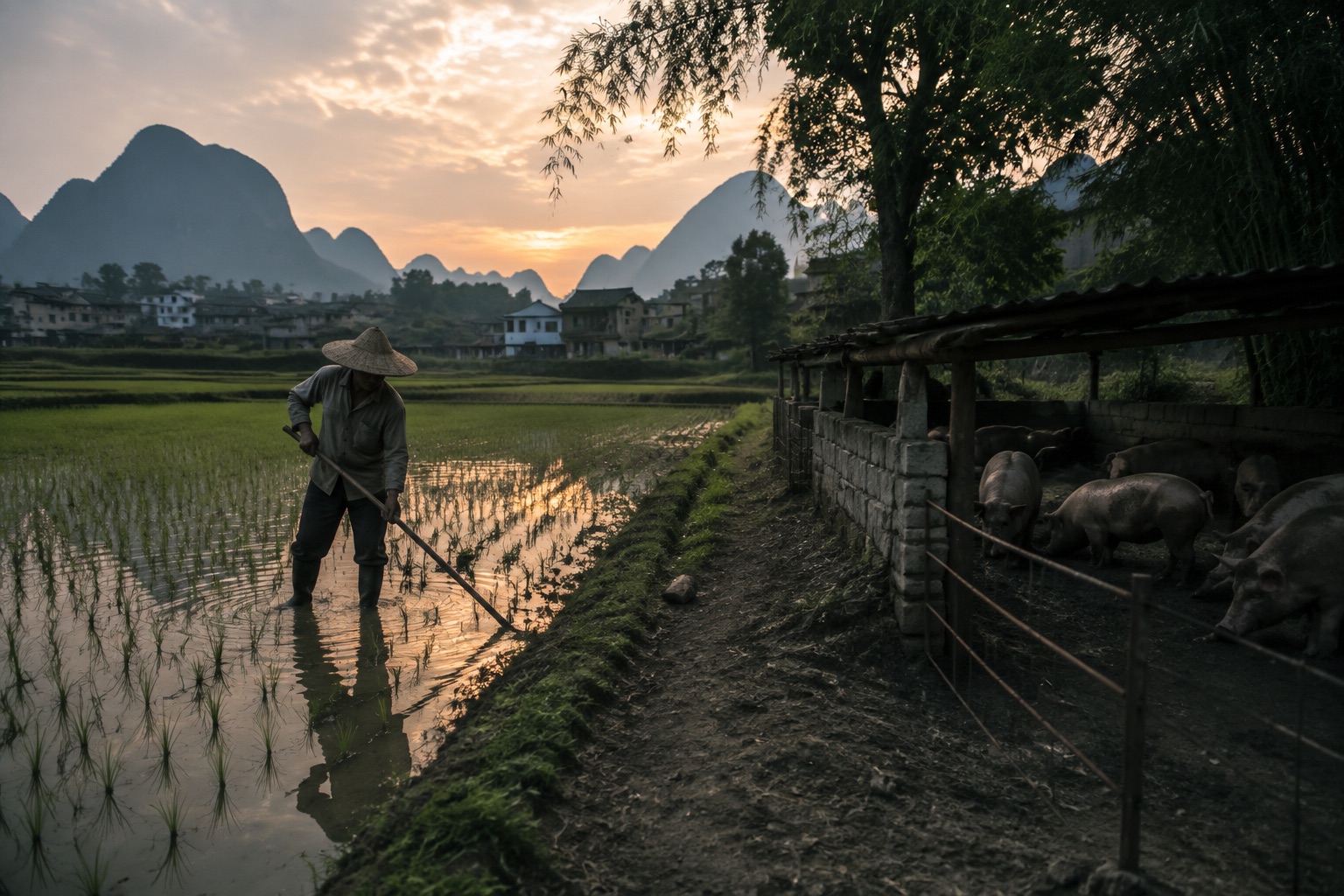 PLATE 205
- Paddy water: Culex nursery
- Pig pen beyond: the amplification host
The amplification chain, one frame
JE is a geography disease before it is a medicine disease: rice water grows the vector, pigs amplify the virus, wading birds carry it wider.
Flooded paddies breed Culex in agricultural scale. Irrigation calendars are epidemiology here.
Pigs host high virus loads without falling ill, multiplying the virus mosquitoes then carry.
Wading birds spread the virus across regions, seeding new rice-paddy cycles far away.
The red flags, and the planning question
Neurological flags are emergency. The vaccine question is a travel-clinic question, asked before the trip.
The vaccine decision, on a calendar
JE is vaccine-preventable, which turns geography into an itinerary question with a lead time.
Rural Asia, especially near pig farms and rice, plus travel through the wet season: the risk profile.
A month or more in rural areas, or repeated trips: the profiles where vaccination moves from optional to advised.
The schedule needs weeks: two doses spaced, plus ten days before departure. A travel clinic visit belongs at trip planning, not at packing.
THE QUESTION PEOPLE ACTUALLY TYPE
Do I need the Japanese encephalitis vaccine? It depends on itinerary: rural Asia, transmission season, and length of stay raise the recommendation. The vaccine is effective, but the decision belongs to a travel clinic, made before the trip.
WHO Japanese encephalitis fact sheet, checked 2026-09
The numbers, in context
Every row sourced, every page dated.
| FACT | VALUE | SOURCE |
|---|---|---|
| Symptomatic share | Less than 1% of infections | WHO |
| Case fatality, neuroinvasive | Up to 30% | WHO |
| Permanent sequelae | 30-50% of survivors | WHO |
| Vector | Culex, rice-paddy habitat with pigs and birds | WHO |
| Vaccine | Effective, WHO-prequalified available | WHO |
The exposure surface, not a single outbreak year
JE does not produce a tidy annual global dashboard like dengue. The scare is the geography: rice, pigs, night Culex, and a vaccine that works if you book it weeks out.
| WHO SURVEILLANCE STANDARD | FIGURE |
|---|---|
| Clinical cases, annual estimate | about 68,000 |
| Deaths, annual estimate | 13,600 to 20,400 |
| Countries with transmission | 24 in South-East Asia and the Western Pacific |
| People living in endemic countries | more than 3 billion |
WHO Japanese encephalitis fact sheet
WHO JE surveillance standard and fact sheet (68,000 / 13,600-20,400), checked 2026-09.